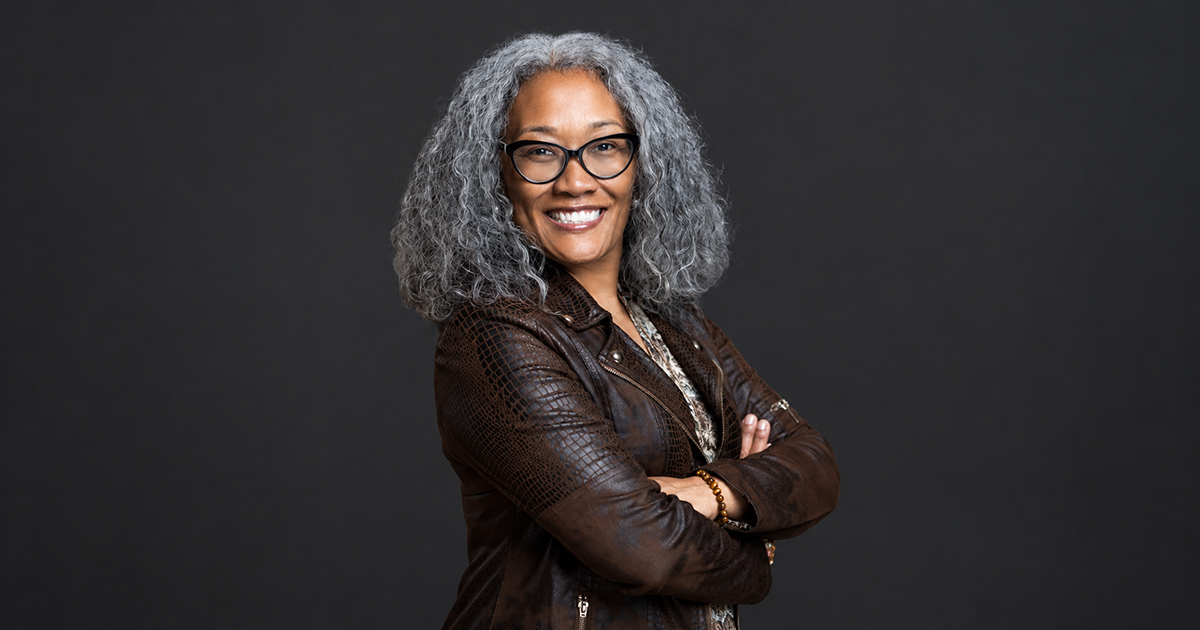
When one of Linda Robinson’s family members became a Beyond Housing client, she saw firsthand how opportunities can change lives. Over time, as her curiosity about the nonprofit grew, Robinson went from being a financial contributor to an active supporter—and she recently joined Beyond Housing’s staff as a gift officer.
“I am grateful and humbled to be working here now, because I know that when someone enters a Beyond Housing program, there is an ongoing component,” Robinson said. “Whether it is giving entrepreneurs the skills to be successful or helping a renter become a homeowner, we will be there for you with resources.”
Robinson worked in the finance industry for 28 years, but even with a demanding corporate job, she took time to give back to the community. Her interest in training people and building their capabilities led her to pursue a master’s degree in Human Resource Development at Webster University.
“The dean of the Nonprofit Leadership graduate program came and talked to one of our classes, and that convinced me to take an elective in nonprofits,” Robinson said. Intrigued and inspired, she went on to earn a second master’s degree in Nonprofit Leadership.
Robinson’s career in the nonprofit sector has included positions with Big Brothers Big Sisters of Eastern Missouri, the Save Our Sisters Program from the Urban League of Metropolitan St. Louis, and ALSAC, the fundraising and awareness organization for St. Jude Children’s Research Hospital. It was with ALSAC that Robinson first stepped into a fund development role.
“I ended up loving fundraising, even though it’s very hard,” she acknowledged. “You’re not just raising funds, you’re raising awareness of the mission and cause of the organization while bringing people together.”
Acknowledging challenges while focusing on the positive
Robinson is a lifelong St. Louisan who understands the importance of the 24:1 Community uniting and amplifying the needs, goals, and dreams of its residents. “The voice of the community is how you grow,” she explained. “And when you listen and make those changes—and the people see it and feel it—they are willing to do more. They have more appreciation for where they live. They make sure their areas look nice. They let their voice be heard on other topics.”
While Robinson is deeply aware of the need for the services Beyond Housing provides across education, health, housing, economic mobility, personal finance, and employment, she emphasizes that she believes in maintaining a positive outlook. “If we focus on the problems and challenges as adults, our youth will focus on that too—and the Normandy Schools Collaborative is the key for them to start building their lives. It is like a tree, and they are the branches growing.”
Her new role with Beyond Housing includes leading business development strategy for the 24:1 Cinema and other facilities. She is exploring how to best align Beyond Housing’s pillars, such as economic mobility, with promotion and marketing of the venues the nonprofit owns and manages.
“It’s not just about coming to watch a movie, but for the community to recognize the cinema as an asset they can utilize in different ways, whether that is for corporate social responsibility or speaker series, or holiday events,” Robinson said. “I’m excited to bring my network in to talk about the possibilities while I help them learn about the 24:1.”
These are challenging times for nonprofits, but Robinson takes heart from the stewardship Beyond Housing has cultivated among its supporters. “We can’t be in transactional relationships,” she said. “It is all about building true relationships to sustain our revenue. We need to be creative, think outside the box, and be innovative in our approach. And we also need to show measurable results that demonstrate we continue to be a strong organization.”
Beyond Housing’s 50-year legacy demonstrates the commitment of its staff and supporters, which Robinson believes is tremendously important going forward. “We are all going to have to be in this together and really think about long-term partnerships,” she said. “You can’t be siloed in the nonprofit world today.”