When communities lack stability and continuity, success can feel fleeting at best and unachievable at worst.
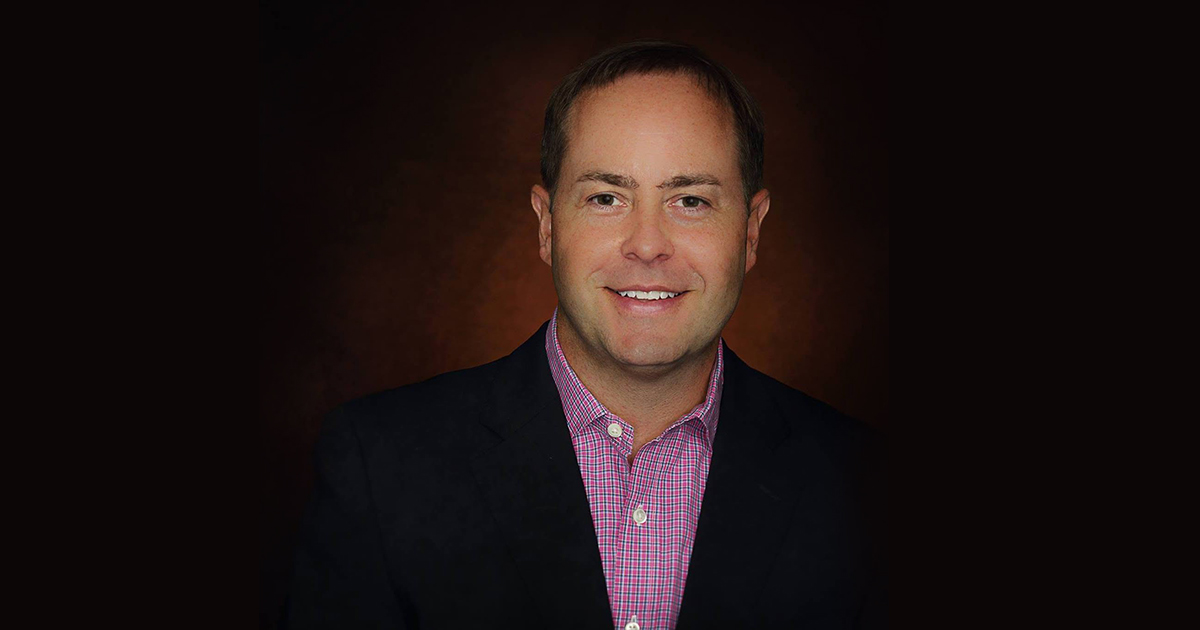
Growing up in inner-city Cincinnati, Aaron Hempel saw this all too often among his friends and neighbors. Their experiences motivated him to seek out organizations making a steady impact.
When Hempel learned about Beyond Housing after moving to St. Louis in 1994, he quickly recognized that the staff had a long-term perspective in line with his own.
For more than 30 years, Hempel has supported Beyond Housing as a volunteer and donor. “Beyond Housing has a special place in my heart because I like what they stand for and what they accomplish,” he said. “It’s not like Beyond Housing is giving people a sandwich and 50 bucks. It’s a lot more than that.”
Beyond Housing’s comprehensive model is based on decades of experience and insights from national leaders and researchers. It recognizes that thriving families and communities have many needs that must be met in order to thrive, including affordable housing, a living wage, successful schools, transportation, access to essential goods and services, sound infrastructure, and more.
Because families’ needs are interrelated and interdependent, Beyond Housing provides services in an integrated, holistic manner via staff who work together closely in a case management style to ensure efforts are coordinated.
“Life is tough, but people are trying, and I love that in every way.”
The ultimate goal of Beyond Housing’s services is to move families toward self-sufficiency—and that goal resonates deeply with Hempel.
“The people we’re giving to aren’t trying to take a free handout,” he emphasized. “For one reason or another, they have less fortunate circumstances, and they just need some assistance. They are really making an effort. Life is tough, but people are trying, and I love that in every way.”
Building awareness and social connections
Hempel’s involvement with Beyond Housing was shaped by another set of childhood memories too. The more affluent students at his high school had never seen neighborhoods like his. They had never met families struggling with economic, housing, and well-being challenges. They had never met anyone whose ability to achieve their full potential was limited by generational poverty.
He realized many St. Louisans were in the same position. “Most people are good, and when they become familiar with what’s happening, they want to help others,” he said. “There’s a lot of population around St. Louis that doesn’t know about Beyond Housing—or even if they’ve heard of them, they don’t know what they’re actually doing.”
To address this information gap, Hempel helped found Beyond Housing’s inaugural Young Friends group. “Our goal was to raise awareness of the younger generation about Beyond Housing and its work,” he recalls. “We tried to do that in different fun ways. One of the coolest events we did was over at the Dwight Davis Tennis Center in Forest Park, where we organized food trucks, a live band, beer and wine—there was even an electric bull. People really loved it. We raised money, but we also raised a ton of awareness.”
Other favorite events included back-to-school fairs and neighborhood cleanups. “Those really made an impression on me,” Hempel said. “You saw the impact you were making and could really feel the emotion.”
Reasons for hope
Hempel works in the mortgage industry, which gives him a unique perspective and fuels his optimism. “I’m hopeful about the younger generations moving forward in St. Louis,” he said. “They have the opportunity to really make a difference in St. Louis and bring the region together.”
He believes there is a growing recognition that many interconnected factors impact the ability of Beyond Housing and other nonprofits to provide services, from the higher cost of insurance to cutbacks in federal funding. “People seem to be more cognizant of what’s happening—and why,” Hempel said.
And he is excited that Beyond Housing has revived its Young Friends program for early to mid-career professionals committed to fostering a stronger, more prosperous St. Louis—once and for all.
“When people do have extra money to give, they want to know it’s making a difference.”
“Most St. Louisans want to help, but they don’t have much time,” Hempel explains. “And life is expensive, so when people do have extra money to give, they want to know it’s making a difference.” The Young Friends program is a way to engage newcomers with Beyond Housing’s holistic model and demonstrate how its mutually reinforcing efforts make each dollar invested more effective.
“Beyond Housing is changing people’s lives by fostering their independence,” Hempel said. “What that looks like can mean different things for different people, but they are all working toward the same goal.”